VT-MUSE Fuses Vision and Touch to Sharpen Robot Manipulation
Researchers have introduced VT-MUSE, a representation-learning framework that jointly models vision and touch across time to improve robotic manipulation. The method outperformed the strongest baseline by 11 percentage points on a simulation benchmark and showed gains in real-world tests.

R2 Labs CEO Talks Software-Defined Manufacturing on Robot Report Podcast
Episode 258 of The Robot Report Podcast features Dr. Roby Lynn, founder and CEO of R2 Labs, discussing software-defined manufacturing and flexible production. The episode also recaps recent industry news, including Unitree Robotics' IPO and FORT Robotics' planned SPAC merger.
Scaling Robots? The Real Bottleneck Is the Human Workforce
How Digital Twins Help First-Time Buyers Test Automation

Sunseeker CEO: AI and GPS Could Put Robot Mowers in Half of US Homes
In an opinion piece for The Robot Report, Sunseeker Robotics CEO Terry Ma argues that advances in AI, satellite positioning, and connectivity are turning robotic lawn mowers from a niche gadget into a mainstream home-automation category. He projects the US robotic mower market could approach 50% household penetration within eight years, while also pointing to commercial landscaping as a major growth opportunity.
Latest News
New Branch-and-Bound Method Speeds Robot Path Planning Through Convex Regions
Researchers have formalized a new routing problem called the Steiner Traveling Salesman Problem on Graphs of Convex Sets, which models robot navigation through required and optional regions. Their branch-and-bound search algorithm found feasible solutions on all tested benchmark cases within 30 seconds, far outperforming two existing baseline methods that only succeeded on about half the instances.
Survey Maps Six-Stage Blueprint for Autonomous Space Mining Robots
A team of researchers has published a comprehensive survey on space mining robotics, proposing a six-stage framework covering everything from remote sensing to resource extraction. The paper, posted to arXiv, also catalogs mission data, analog datasets, and simulation tools while outlining open challenges for building an off-world economy.
New Method Uses Coastlines to Navigate GPS-Denied Boats
A new arXiv preprint presents two localization frameworks for autonomous surface vessels that rely on coastal geometry instead of GPS. One uses LiDAR to track vessel motion and match shorelines to satellite maps, while the other uses only a monocular camera and semantic segmentation to achieve similar results with bounded drift.
New AI Framework Bakes Anatomy Rules Into Neural Networks
Researchers have proposed Anatomy-Informed Neural Networks (AINN), a framework that embeds anatomical rules directly into a model's loss function and architecture so it cannot produce anatomically impossible predictions. The approach is demonstrated on a data-scarce clinical problem — how the aortoiliac artery tree deforms when a stiff guidewire is inserted — using an SE(3)-based mechanical model rather than a trained network, as a step toward autonomous endovascular navigation.
ViTacPhys Lets Robots Sense Weight, Friction, and Stiffness
Researchers describe ViTacPhys, a visual-tactile learning framework that estimates an object's mass, friction, and stiffness from human manipulation demonstrations, then uses those estimates to adapt robot grasping. Tested on 60 rigid and deformable objects, the system reports strong accuracy on seen items and solid generalization to new ones, reaching up to 95% grasping success in robot trials.
NeSAM Boosts Off-Road Robot Motion Prediction Using Soil Physics
Researchers unveiled NeSAM, a framework combining differentiable soil-mechanics equations with a Transformer-based correction model to predict off-road vehicle motion. Tested in simulation and on a physical robot, it improved prediction accuracy by up to 30% and cut trajectory-tracking error by 69.4%.
New "Action-JND" Method Trims Robot AI Models Without Changing Behavior
Researchers have proposed Action-JND, a technique that decides which visual tokens a robot's AI brain can safely drop or reuse without altering its actions. Tested on the LIBERO benchmark with OpenVLA and OpenVLA-OFT, it improved compression reliability, especially at aggressive compression ratios, according to a new arXiv preprint.
Schaeffler to Mass-Produce Humanoid Robot Gearboxes by 2027
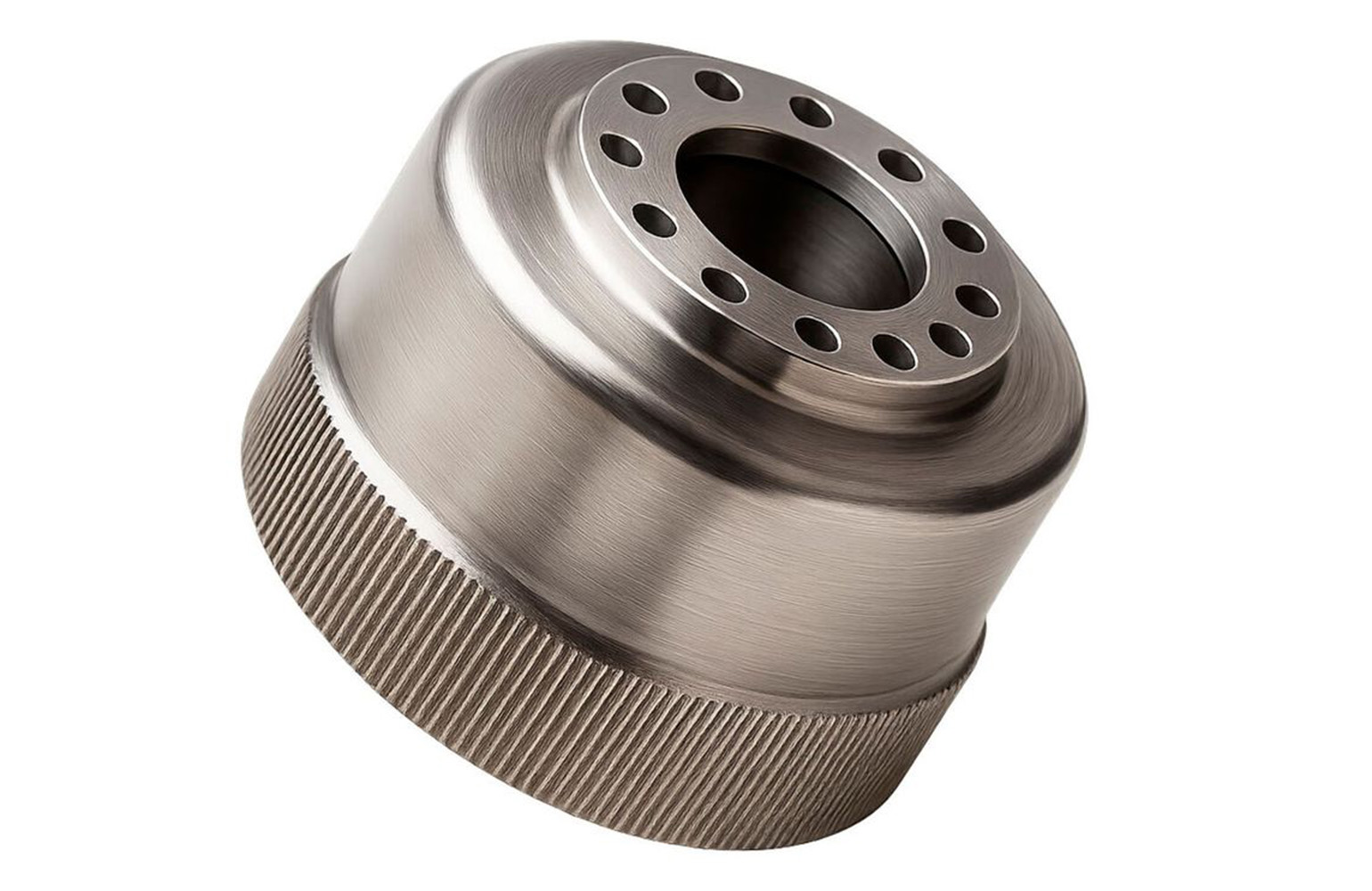
Schaeffler Technologies AG has finished validation testing on formed strain wave gearboxes designed for humanoid robot joints and plans to begin mass production in 2027. The company says its forming-based manufacturing method is faster and cheaper than traditional precision machining while matching its torque and efficiency.